Chocolate cake.
You know you want it. It’s being offered to you after dinner, but you’re on a diet. Your wife looks at you. For a moment, it feels like the choice is entirely yours.
You reach out and take the cake.
Your wife says, “I knew you wouldn’t be able to resist. That’s just like you.”
What if I told you, at that moment of decision, you had no choice? That choice was already made. You merely acted out what was already decided. Does that absolve you of responsibility? Can you look at your wife with a clean conscience?
According to Benjamin Libet’s famous experiments, this is closer to reality than we like to admit. The brain begins preparing for action hundreds of milliseconds before we become consciously aware of deciding anything. What feels like free will in the moment is often downstream of processes already set in motion.
Thus, your free will was not exercised at that moment of decision. You merely reacted. When presented with the choice, your brain went into gear, pathways that already existed fired before you were even aware of it, and you reached out and took that delicious piece of chocolate cake.
If someone knew the state of every molecule, every neuron in your brain, and had full knowledge of all laws of nature and physics, they could have predicted with 100% accuracy that you would have taken the cake. In fact, even without such knowledge, your wife did accurately predict what you would do, based on your past decisions.
So, does this mean that you do not have free will?
Some would argue yes, that is exactly what it means. We live in a deterministic universe. Every event that happens is determined by the state of the universe in the prior instant.
But, are we really just robots? Merely reacting in predetermined ways? Every choice being inevitable?
I submit that the answer to that question is a resounding NO! Free will absolutely must exist. I will explain below why I say that. It is tied up in the meaning of our existence, our cosmic purpose.
So what am I saying?
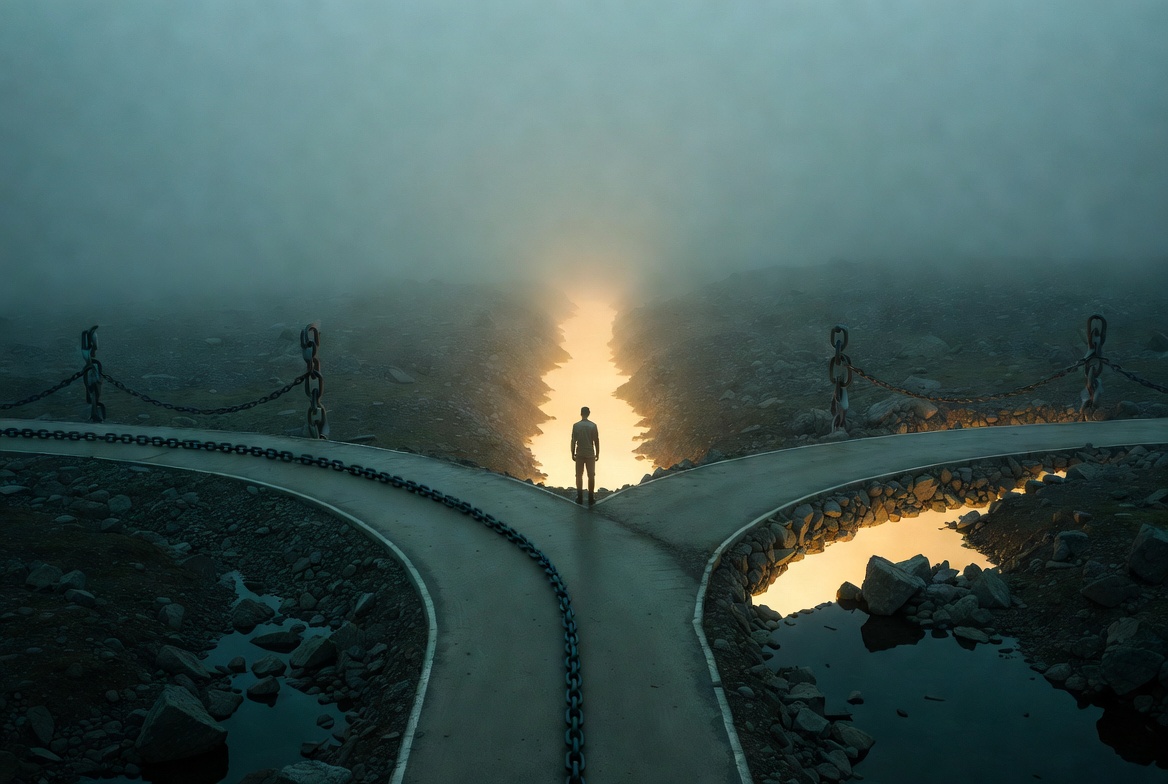
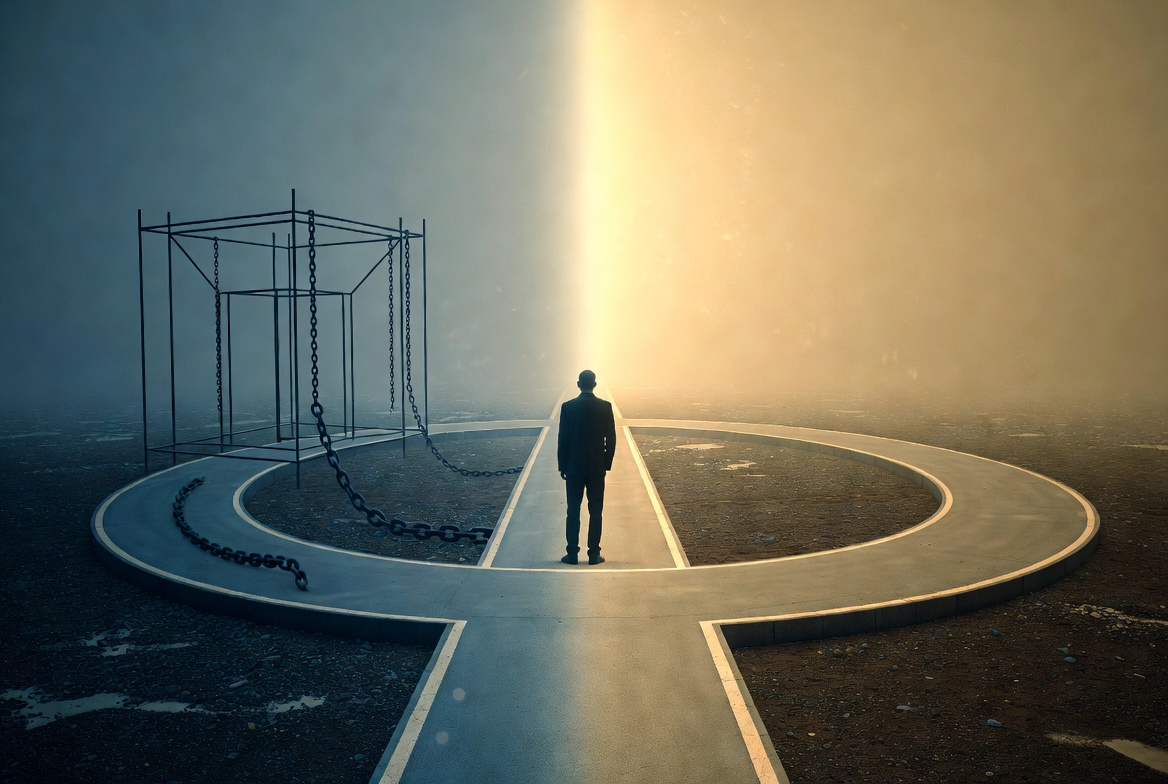
I am saying that free will does exist, but it exists at a different time than when the catalyst occurs, when the choice is presented. It happens before that. Possibly way before that. And possibly it is the culmination of thousands of prior decisions.
Yes, when the catalyst occurs, those pathways fire, and however they are configured will be the choice that we make. But we are responsible for training our brains.
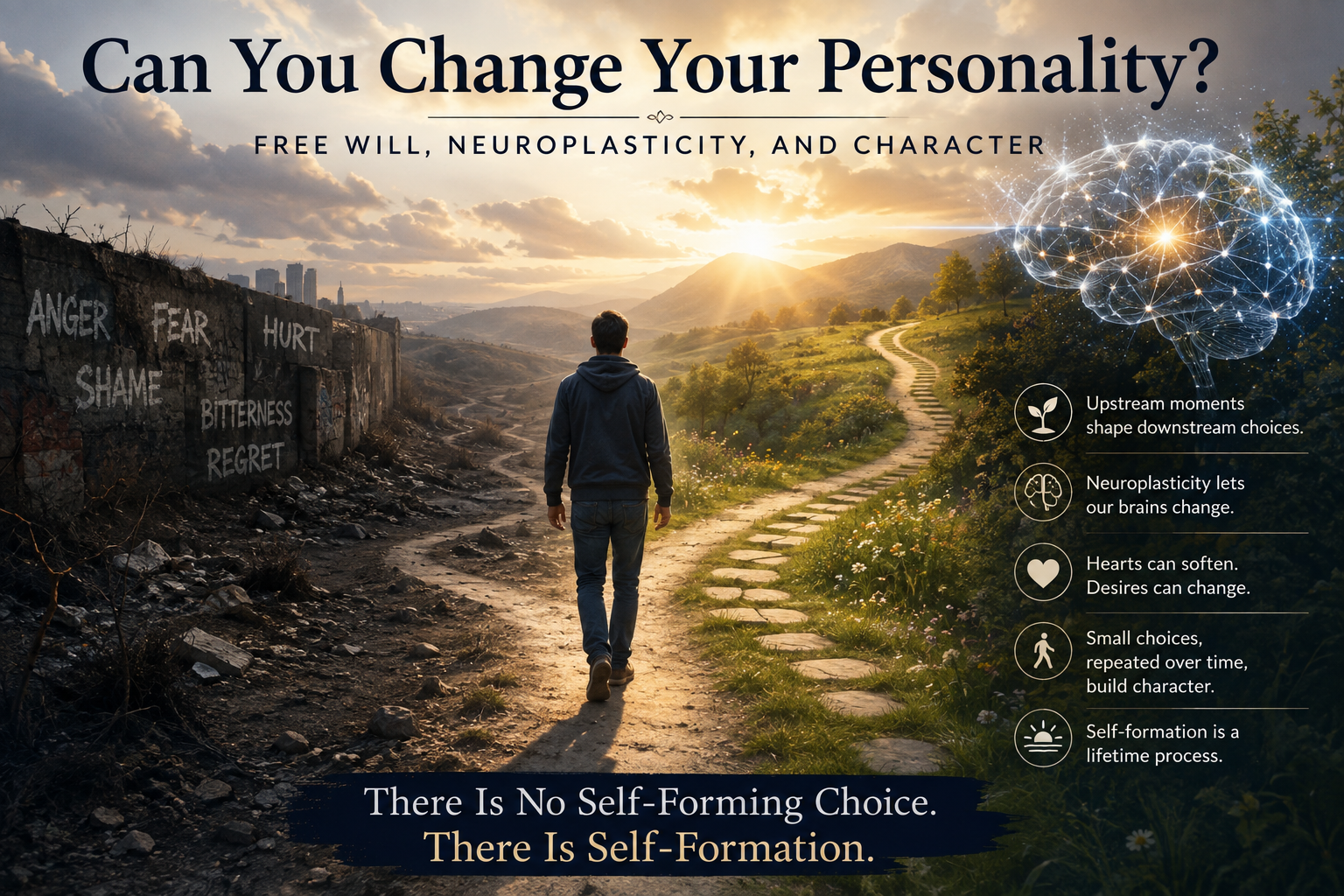
In neuroscience, there is a concept called brain plasticity. We are responsible for creating the pathways in our brain that result in a choice made. When we meditate on something, we are actually physically altering our brains. Pathways are etched in our brains based on the repeated firing of said pathways and the intensity involved.
When does this pathway training occur? I submit it is in those moments of quiet introspection. Perhaps lingering in prayer. Or in any event, those times that we all have where there is quietude and we have full control of our thoughts. That’s where we make the decision. That is where we create the pathways.
I call this the upstream moment.
The upstream moment
This is not academic; the danger is real. If you don’t guard your upstream moments, you begin to hand your will to whoever fills the silence first.
You can actually abdicate your own free will.
Remember what the upstream moments are: the quiet stretches of introspection.
What if you have none?
Today smartphones, YouTube, social media, TikTok, TV, and games rush to occupy every gap. Even in the bathroom, the phone comes along.
What happens to free will?
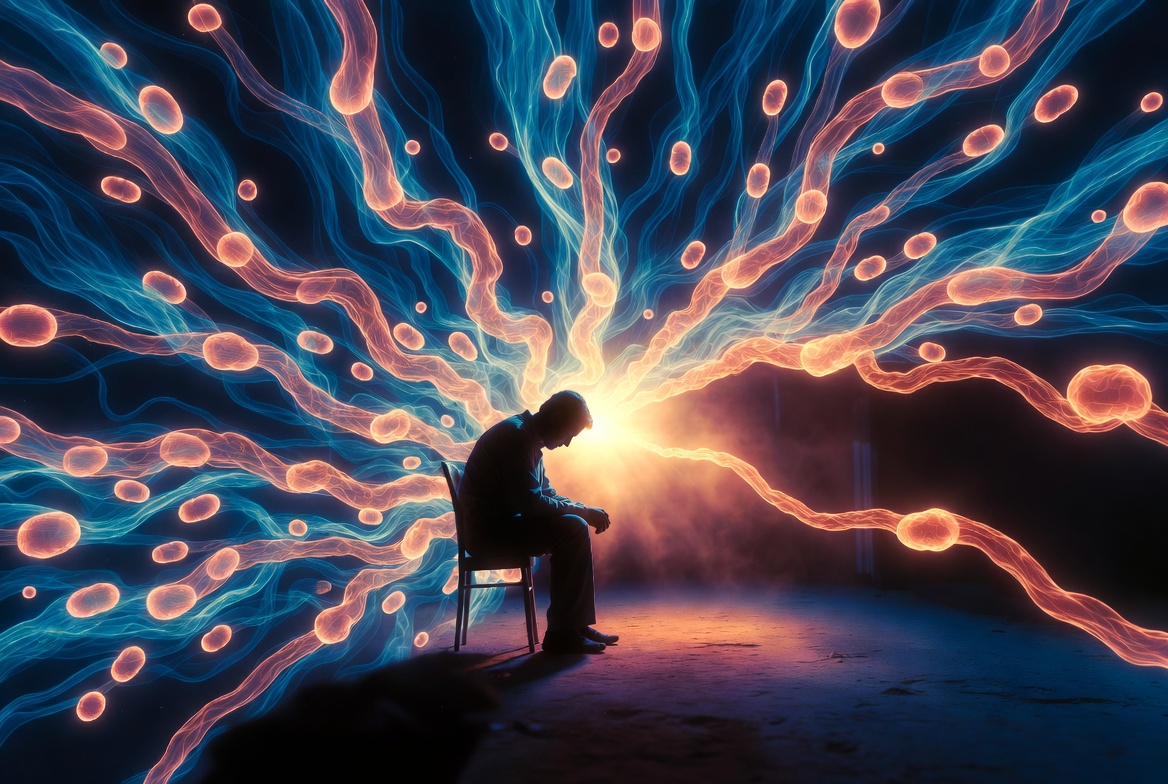
You start ceding it — to the World; to powers that have always preferred a shaped soul to a free one. The algorithm is just the latest instrument. Social media platforms are not accidentally addictive — they are deliberately engineered to ensure the silence never arrives, because a person in silence might actually think. And on the neural level, what repeats becomes readiness; readiness precedes awareness. If you never make space to form your brain according to your will, it will be formed for you.
To guard the upstream, make it concrete: for example, take ten device‑free minutes each morning in silence, or leave your phone outside the bathroom. Small protections compound into freedom.
Without the upstream moment, a soul is functionally indistinguishable from a machine. The difference between a human being and a sophisticated system that merely reacts is not biology or intelligence or even feeling. It is this — the deliberate, chosen formation of the interior life in the quiet before the catalyst arrives.
Guard the upstream moments.
Take ten device-free minutes each morning in silence. Leave your phone outside the bathroom. Create small protections that compound into real freedom.
Because the moment you stop guarding the quiet, you don’t just lose a spiritual practice. You begin to lose the thing that makes you human.