Libertarian free will vs determinism: It’s all about the causal chain.
What is the causal chain?
The causal chain is the continuous sequence of causes and effects that leads to every thought, emotion, and action. It begins with factors outside our control—genetics, prenatal conditions, and early childhood experiences—and flows through brain chemistry, hormones, past habits, current environment, and immediate circumstances.
The causal chain is real, as in the chain of events, but is viewed differently by libertarians and determinists.
So, what is a libertarian view of free will?
Is libertarian free will correct?
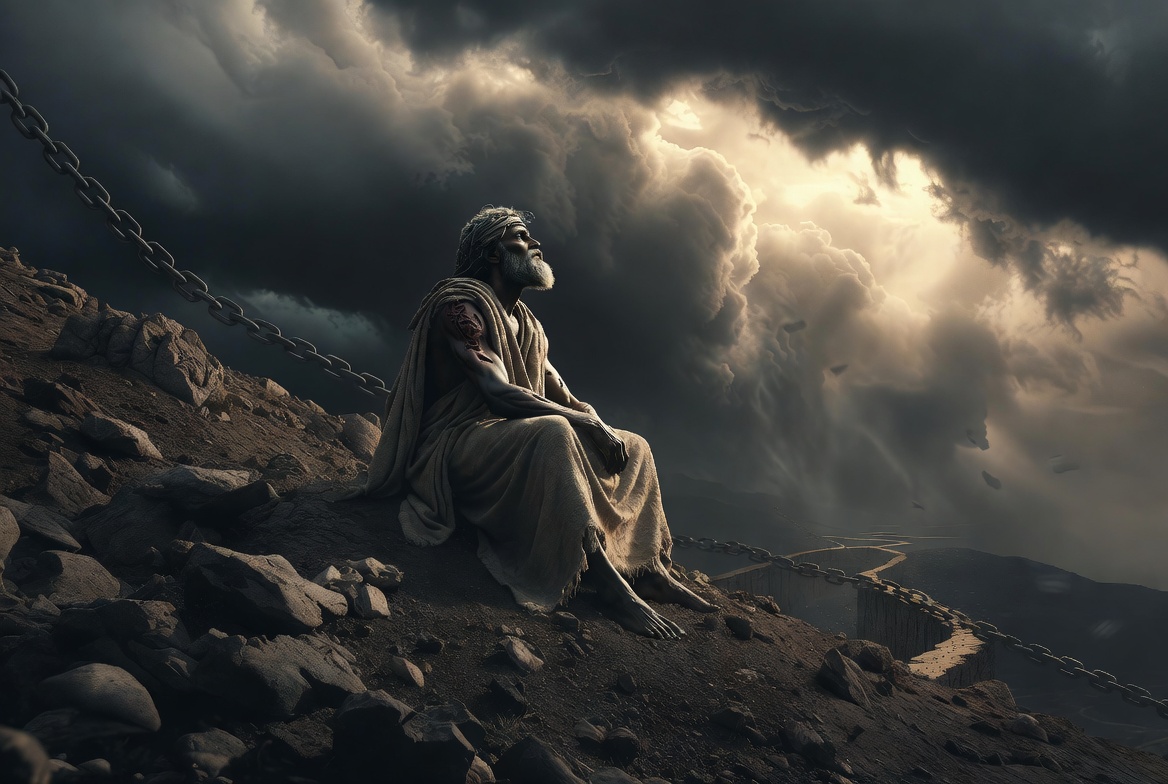
The Libertarian view of free will holds that human beings possess the genuine ability to make free choices that are not fully determined by prior causes. In this view, when faced with a decision, a person can truly do otherwise — even in the exact same circumstances, with the same genetics, history, and external conditions. Libertarians argue that moral responsibility, love, and human dignity require this kind of “contra-causal” freedom: the agent (the self) must be able to originate a new causal sequence rather than simply being the latest link in an unbroken chain of prior events. This position is called “libertarian” because it asserts that free will is incompatible with determinism.
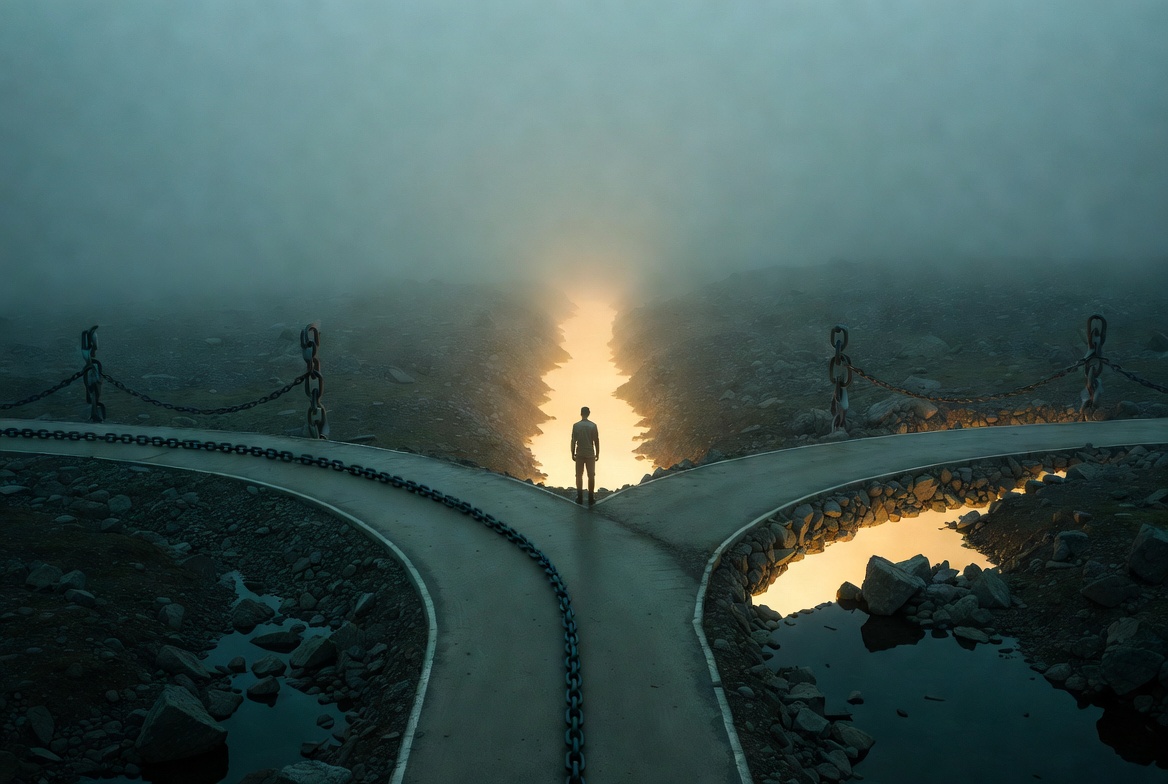
Libertarians say free will lives outside the causal chain, or more specifically, that the causal chain has gaps in it that allow free choice and agency. Libertarians feel that even at the moment of decision, we have free will to make a choice other than what the causal chain dictates. Or, if not gaps, then points of pure randomness, which is still not conscious choice.
Libertarian free will vs determinism
On the opposite side are the determinists. What is the deterministic view of free will?
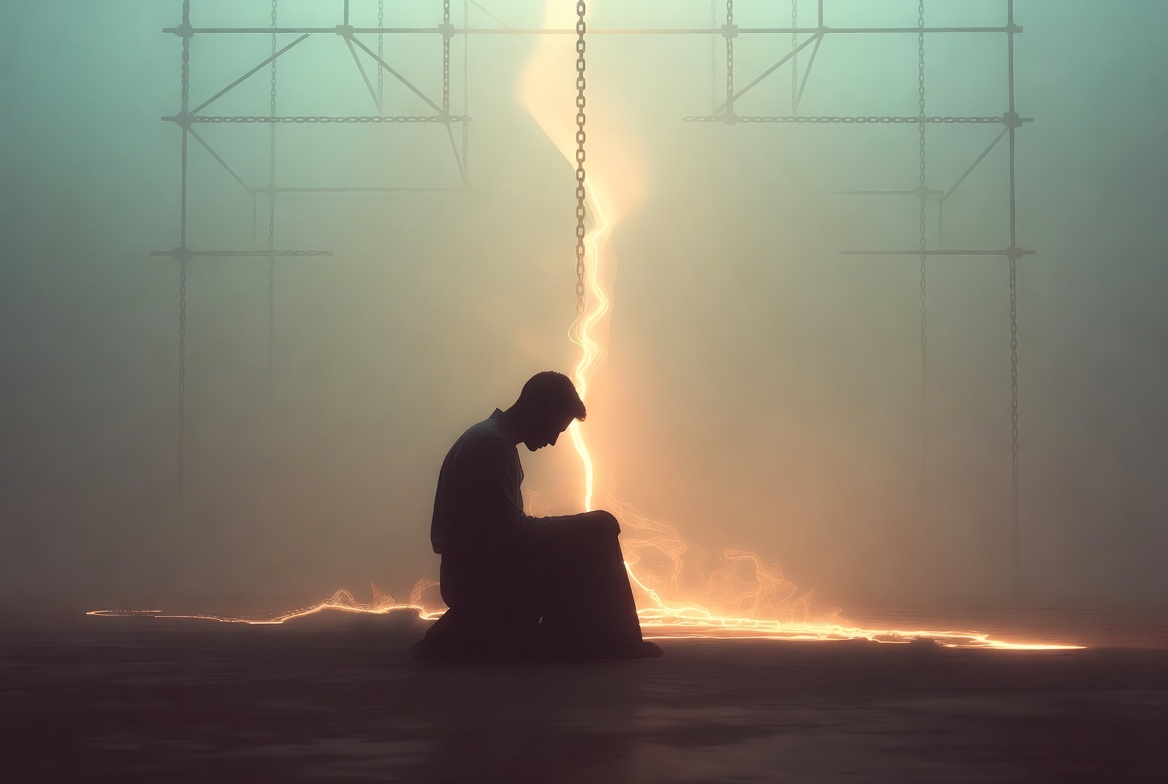
The Deterministic view of free will holds that all human thoughts, decisions, and actions are fully determined by prior causes. Every choice is the inevitable result of an unbroken causal chain that includes genetics, brain chemistry, hormones, childhood experiences, environment, and momentary circumstances. According to hard determinists, free will is an illusion. We cannot truly do otherwise than what the chain dictates. The strong feeling that “I” am freely choosing is itself caused by the brain. Therefore, genuine moral responsibility — in the deep sense of deserving praise or blame — becomes problematic, because no one could ever have done differently.
So determinists say there is no free will at all.
It should be noted that there are hard determinists like Robert Sapolsky who believe that all free will is only an illusion, and then there are some who allow for a small amount of free will to exist. But there is a quantum difference between no free will and some free will. Even Sapolsky hedges on this when he says he hopes to convince people at the least that there is much less free will than believed, implying that there is a small amount of free will available. But I say, either there is free will, or there is not. Some free will, even a little bit, is still free will.
Between hard determinism and libertarianism sits compatibilism. Compatibilists argue that free will and determinism can coexist. They accept the full causal chain but redefine free will as simply acting in accordance with one’s own desires without external force. While this allows for some form of responsibility, many critics (including myself) feel it weakens the meaning of free will to the point that it no longer captures genuine agency.
Compatibilism attempts to reconcile free will with determinism by accepting the full causal chain while redefining free will as simply “acting according to one’s own desires without external coercion.” In the end, this feels like a philosophical word game. They keep the label “free will” but drain it of its essential meaning — the genuine ability to have done otherwise. It solves the problem only by changing the definition, not by addressing the deeper issue of agency.
So which one is correct? Libertarianism, determinism, or compatibilism? I say they all miss the mark.
Free will vs determinism which is right?
The causal chain is real. At the point of decision, there are no gaps. See my essay on The Upstream Moment: Where Free Will Actually Lives for a deeper dive. When we are presented with a decision, our brains fire according to pathways that are already physically etched to make the decision for us. Experiments have been interpreted by some to indicate that our decision is already made before we are even consciously aware of the question. Even a small amount of agency, or as some call it, free won’t, the ability to veto a decision is questionable.
So then is determinism correct? Our brain just fires according to the causal chain, and that’s it. We have no influence on the decision?
That has problems as well. It vacates all moral responsibility. We are not responsible for our actions; that is just the way our brain fired. That also means love and praise are meaningless. See the essay Why Free Will Must Exist For Life To Have Meaning.
Of course, that fact alone does not prove that free will exists. It just says it would suck if it doesn’t. But, intuitively, from lived experience, it seems like we do have control over our actions and are responsible for our decisions.
Is it just libertarian free will vs determinism? Or is there another option?
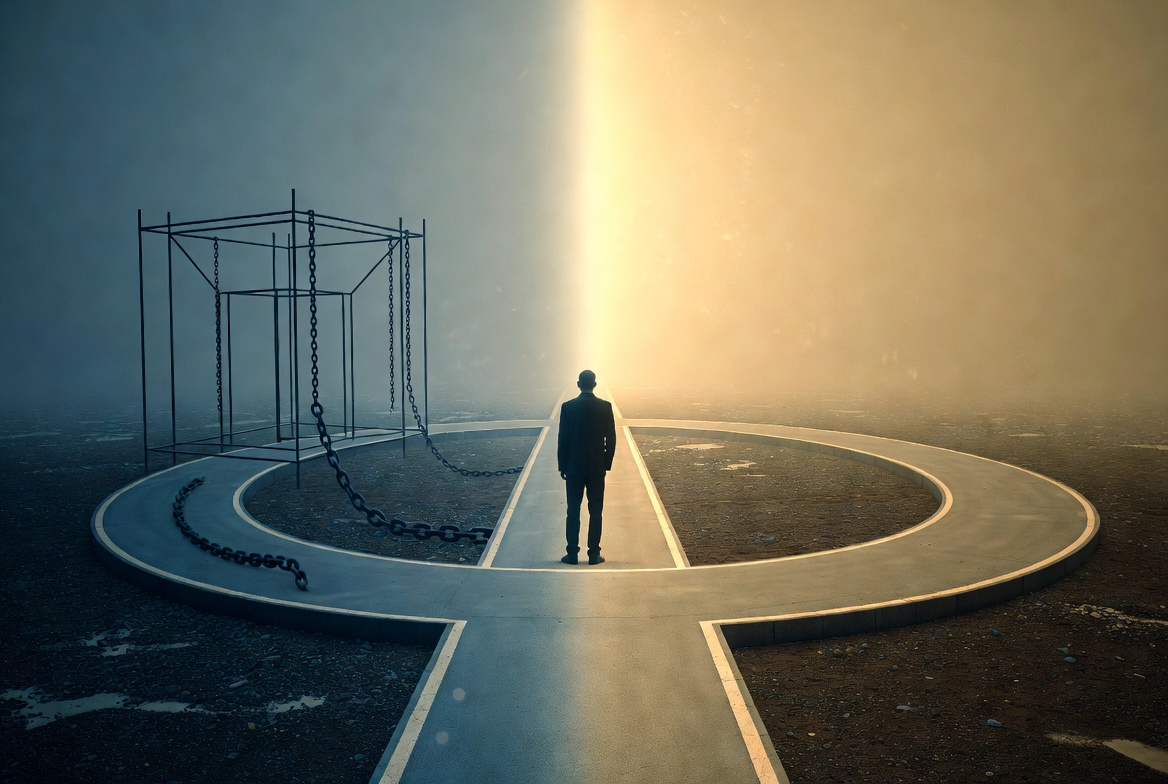
This is why I suggest a third option. I call it the upstream moment.
Basically, it moves the nexus of the act of free will up the causal chain to an earlier point. It is in the spirit of compatibilists in that it allows both a deterministic causal chain and free will to coexist; however, it has nothing in common with playing word games and redefining what free will means. Either you are free to choose, or you are not. It is simply binary.
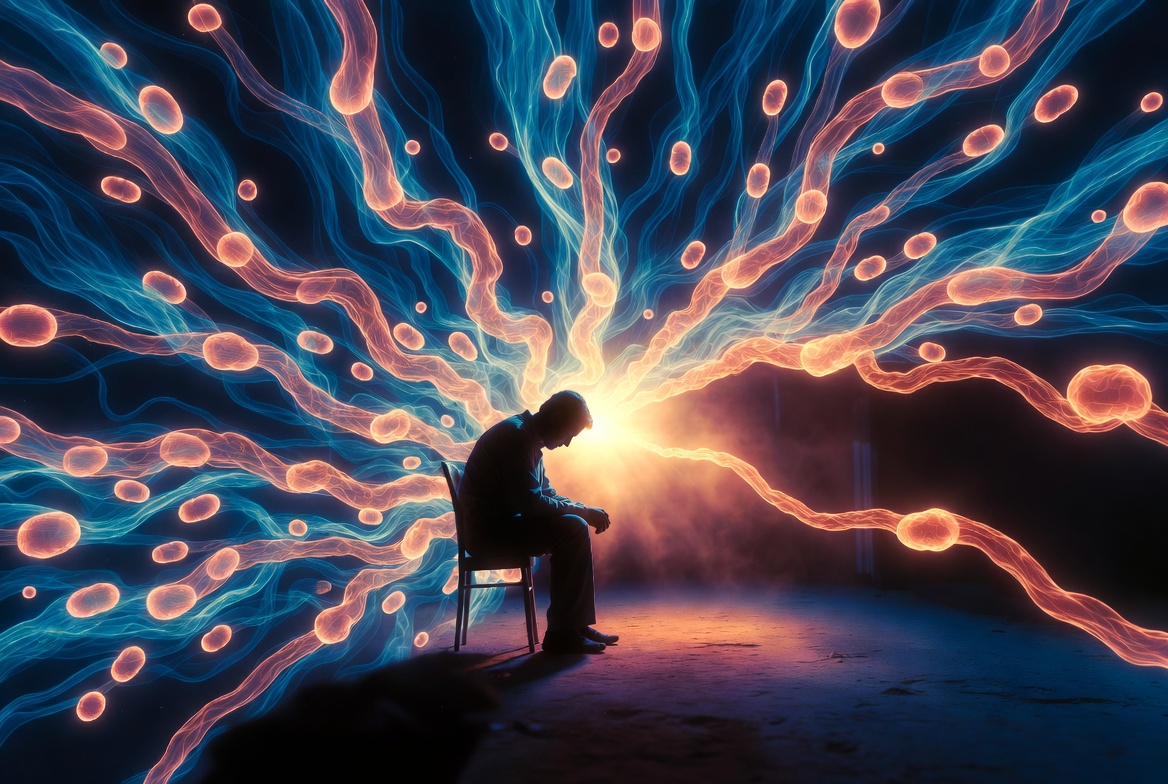
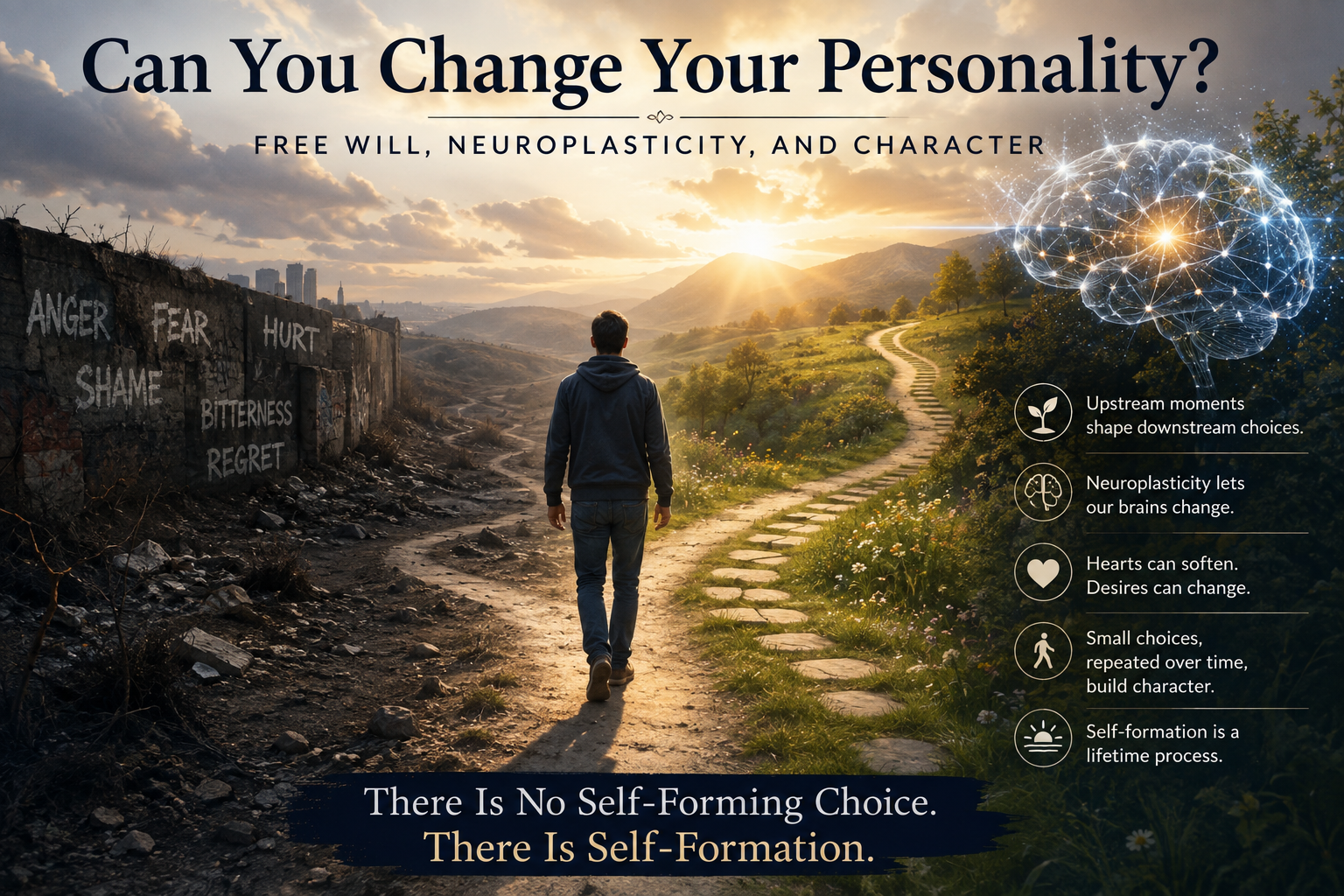
The Upstream Moment is the quiet, low-pressure space of reflection before a strong impulse, temptation, or decision arises. It is the primary arena where genuine free will operates. In these moments of relative neural equilibrium, we can consciously choose which thoughts to pursue and which neural pathways to strengthen. Through repeated upstream choices and neuroplasticity, we shape our character and influence our future downstream actions.
Here’s a concrete picture. At 8 p.m., when you’re calm, you decide whether to keep alcohol in the house for the weekend, text a friend to meet for an early run, and set an app lock that disables food delivery after 10. By 11 p.m., when cravings and fatigue hit, the “decision” largely executes the upstream setup: there’s nothing to pour, you’ve precommitted to a run, and the delivery app won’t open. The agency wasn’t in wrestling the craving at 11; it was in designing the context at 8. Attention, reflection, and environment design at low arousal did the causal work your midnight self could not.
But even that is not a full example, for it is the accumulation of many other decisions you have made throughout your life that have formed your character, such that you can make the right decision at 8. This is why it is so hard to change a pattern quickly.
Thus, free will becomes part of the causal chain rather than existing in gaps or outside of it, which is not possible. A cascade of small decisions earlier in life, perhaps dating back to infancy, when our character began to develop, all add up—repeated practices, habits, and designs—to dictate the decisions we make at the point of inflection.
Yes, some may argue that I am simply moving the point of issue to a different spot on the chain. But this spot is different. It has low neural pressure, and using free choice, you can choose to fire one neural pathway or another.
Of course, then we come to trying to define the actual mechanism where our conscious mind actually makes the choice. There is not yet a consensus explanation of the mechanism, which would likely entail a theory of consciousness itself. I attempt to provide a very speculative framework for how this mechanism works in my essay The Problem of Consciousness: The Mechanism of Free Will.
So in libertarian free will vs determinism, neither satisfies.
So we have full agency and control over the decisions we make, just not at the time we think we are making the decisions.
It is in those quiet moments of reflection, when we are under no particular pressure, that we choose which neural pathways to strengthen, forming our character.
This is why we must protect our quiet moments of reflection. It is the point where addictions are made or broken. We can’t allow distractions and algorithms to hijack our free will.
More on libertarian free will ->