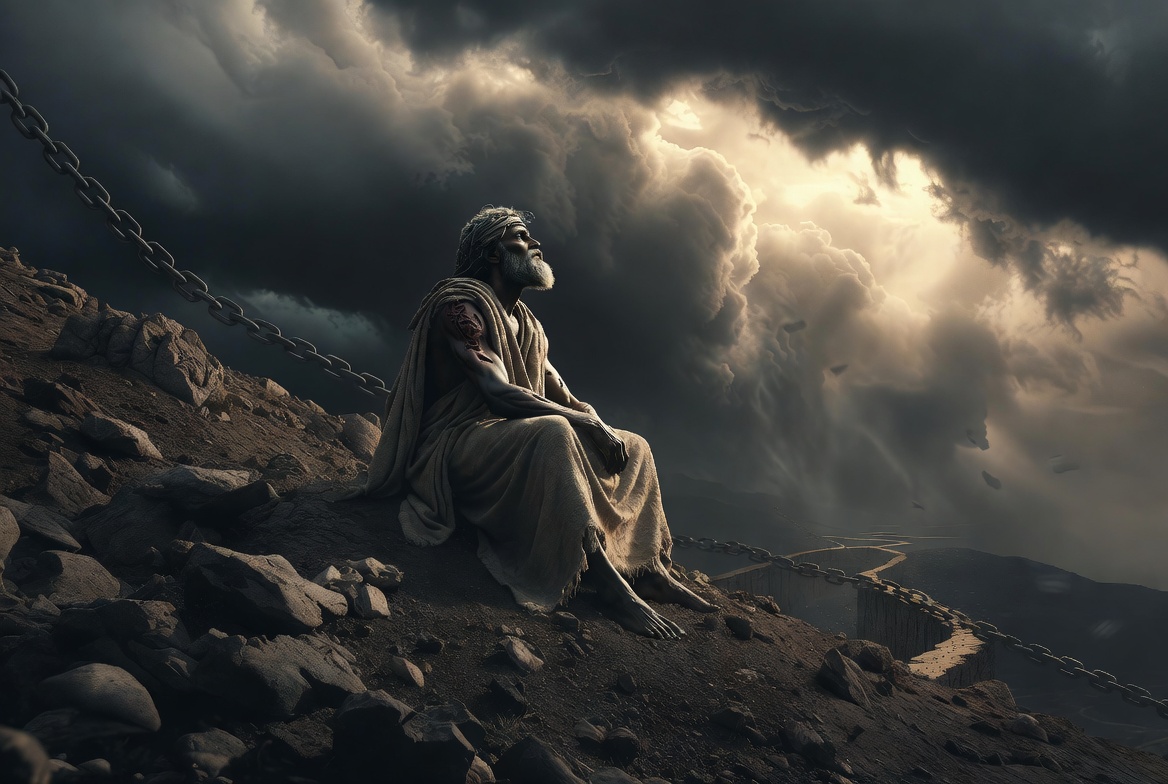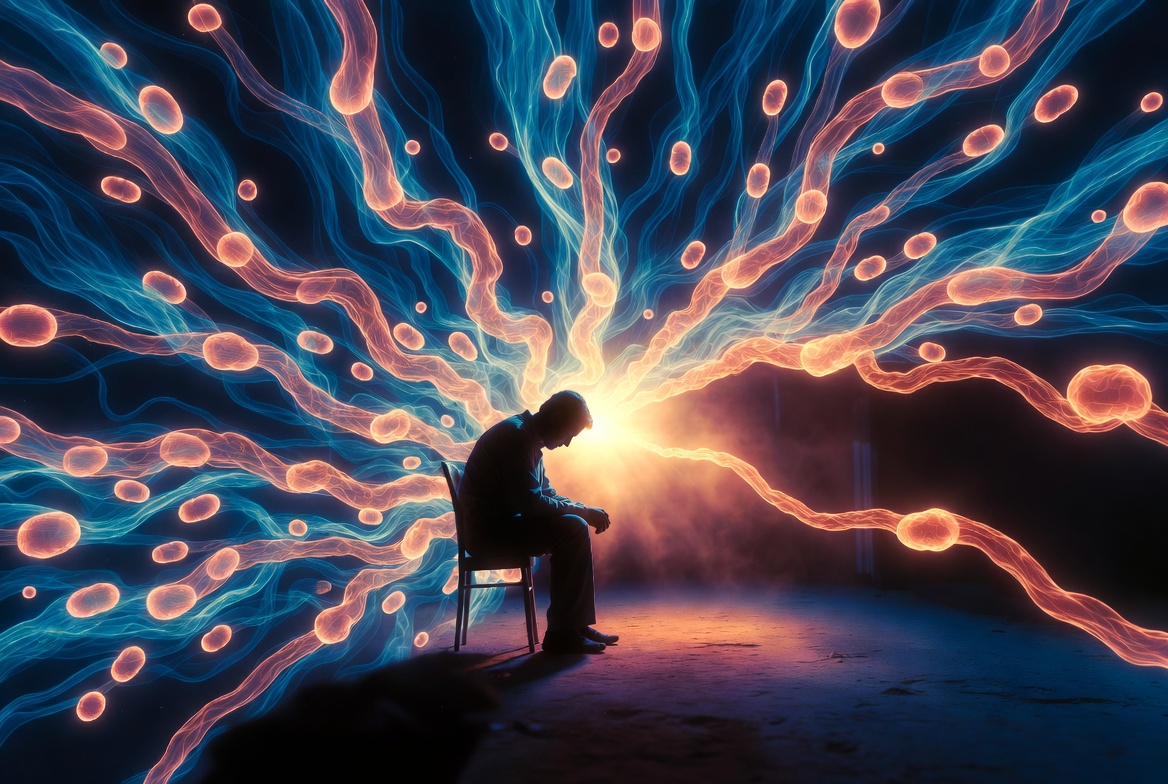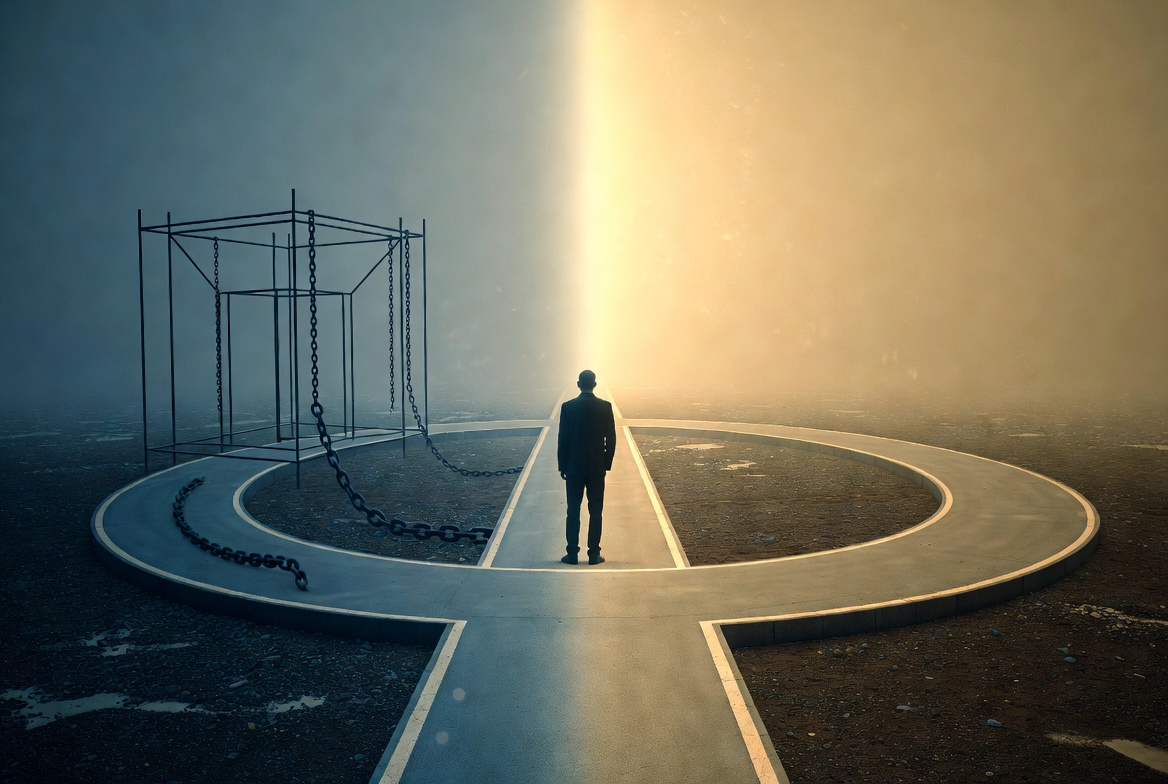

Why free will is necessary for meaning in life: Imagine a man sentenced to death for a crime he had no choice but to commit. His neurons simply fired. The law called it murder.
Imagine a man and woman vowing eternal love for each other, but doing so only because they were programmed to.
Imagine Viktor Frankl in Auschwitz, choosing to find meaning in the darkness, and being told that his choice was nothing more than chemistry.
If free will is an illusion, none of these things have real meaning. And that is not a small loss.
Without free will, our lives have no genuine purpose or meaning. We are reduced to automatons running predefined scripts.
Does free will give life meaning?
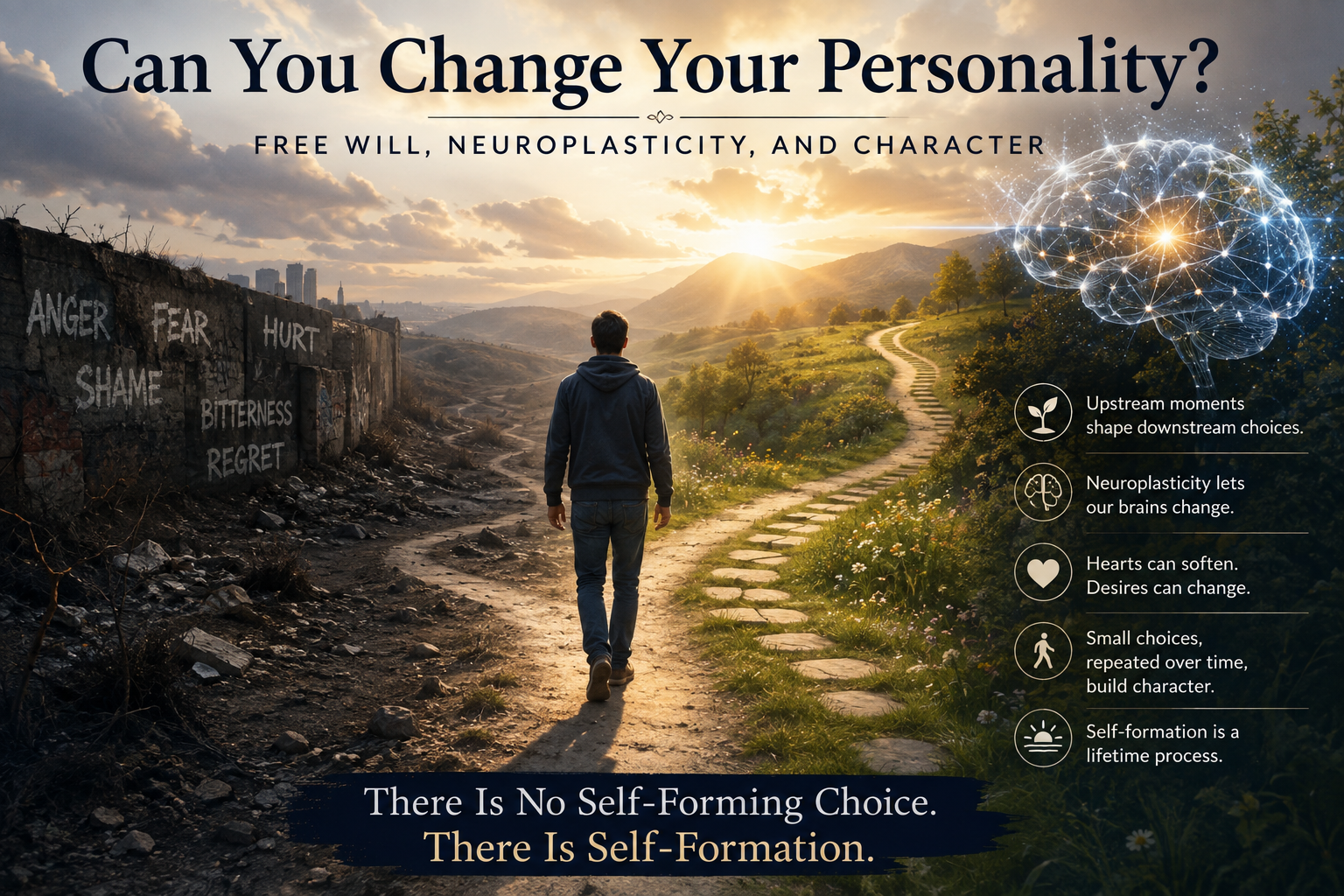
Free will — sometimes called agency — is the genuine capacity to make choices that are not fully determined by prior causes such as genetics, environment, upbringing, or past experiences. It is the ability to shape our own character and future path through deliberate upstream decisions, and to bear the real consequences of those choices.
So what is our purpose? What is the meaning of our life?
Why free will is necessary for meaning in life
Consider why a man and woman choose to have a child. They are not merely adding to the population. At the foundation is love. They want to bring another human into the world so they can love them — and be loved in return.
If we accept, even for the sake of argument, that there is a Divine Creator — God — then the same logic applies on a cosmic scale.
God is complete within Himself. He does not experience loneliness or need. So why create us?
God loves life, and He wanted to share that love with other beings. He created persons so He could love them, and so they could freely love Him — and each other — in return.
But love that cannot be refused is not love. It is programming. God did not create programs. He created persons.
Without free will life has no meaning.
Consider the Garden of Eden. God placed Adam and Eve in paradise and gave them one command: do not eat from the Tree of the Knowledge of Good and Bad. Many see this as a cruel trap. But what if it was a profound gift?
Without that tree, how could they truly express love for God? The tree made their choice real. They could obey and demonstrate love, or disobey and assert their own sovereignty. The choice had to be free — and the consequences had to be real.
They chose to disobey. God could not simply overlook it and say, “It’s alright, I forgive you.” To do so would have unraveled the very purpose for which they were created. The consequences had to stand. Because without real consequences, there could be no real choice — and therefore no real love.
The bottom line is this: for love to be meaningful, for purpose to exist, for our lives to have real moral weight — free will must be real.
It is the foundation of everything that makes being human worthwhile.
This is not empirical proof that free will exists. The argument is predicated on a belief in God. If there is no God, then this line of reasoning cannot prove free will must exist. However, what I am saying is that for our lives to have meaning, free will must exist. And if God created us for a purpose, then our lives do have meaning.
Learn more about how your life can have meaning –>